
Snowshoeing in Banff: 5 Mistakes Beginners Should Avoid
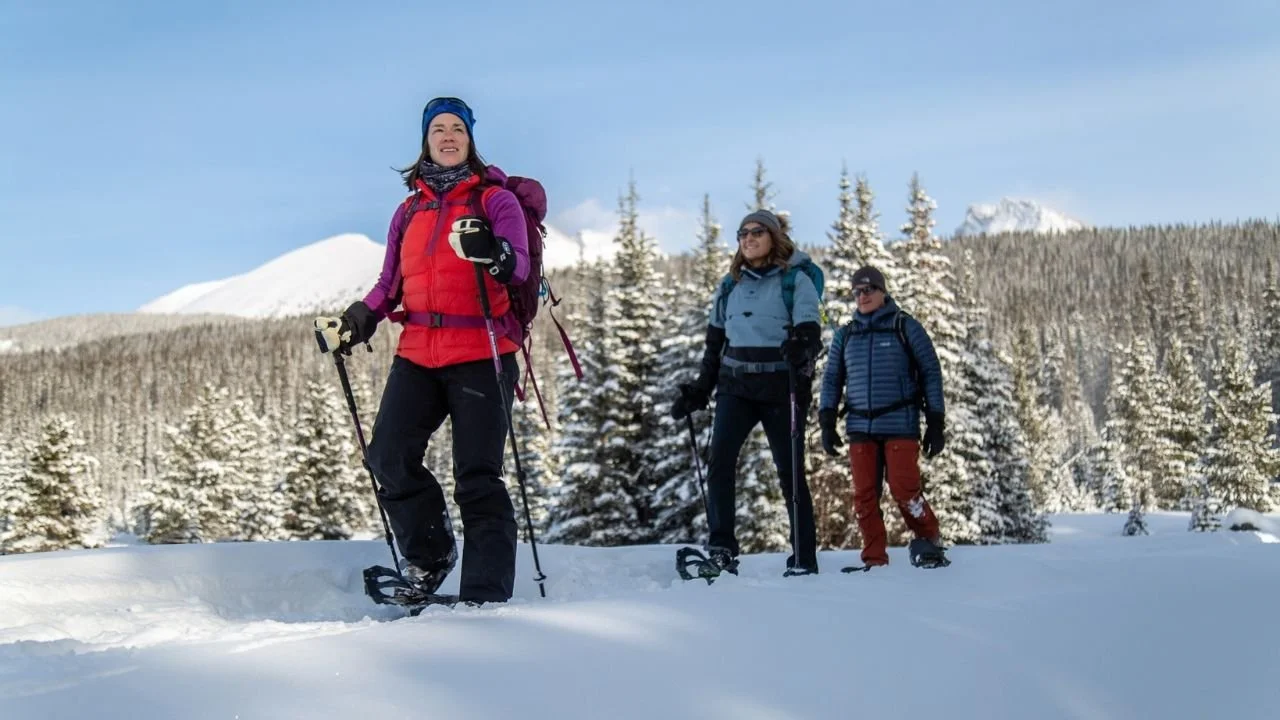
Snowshoeing in Banff is beginner-friendly when you pick a winter-safe route, dress for changing weather, and know when snowshoes are the right tool. The walking technique is simple. The harder part is making good choices before your boots touch snow.
A summer trail can cross avalanche terrain in winter. A busy path may be so hard-packed that ice cleats work better than snowshoes. And a short route can feel much longer after fresh snow. Parks Canada says prime snowshoe conditions are usually from late December to early April and are often best after recent snowfall. Avalanche season, though, can run from November to June. Winter in the Rockies is easy to enjoy, but it rewards good judgement.
Snowshoeing in Banff at a Glance
Good for beginners? Yes, on suitable winter routes and in suitable conditions.
Best general season? Late December to early April.
Do you always need snowshoes? No. Firm or icy trails may suit boots and traction cleats better.
Can an easy trail become hard? Yes. Ice, wind, new snow and poor visibility can change it fast.
Do you need a guide? Not always, but a private guide can remove route, gear, driving and pacing stress.
Where Can Beginners Go Snowshoeing in Banff?
Simple terrain is often best for your first outing. It lets you learn the gear without spending the whole walk staring at your feet. Parks Canada currently lists several easy winter options.
| Route | Rating | Distance | What to know |
|---|---|---|---|
| Tunnel Mountain Drive | Easy | 2 km one way | Closed to vehicles in winter, with views toward Cascade Mountain. |
| Johnson Lake | Easy | 2.8 km loop | Minimal elevation gain, with views of Cascade and Rundle mountains. |
| Fairview Lookout, Lake Louise | Easy | 1.2 km one way | Return the same way. The loop option enters avalanche terrain. |
“Easy” is a rating, not a promise. Parks Canada notes that easy routes can become difficult with ice, bad weather or poor visibility. Check conditions on the morning you go.
5 Mistakes Beginners Should Avoid When Snowshoeing in Banff
Mistake 1: Assuming a Summer Trail Is Safe in Winter
Winter changes more than the view. A trail that feels simple in summer may cross avalanche terrain once snow arrives. Parks Canada also warns that old tracks do not prove a route is safe.
Before you head out:
Check current trail conditions.
Check the weather forecast.
Look for closures and safety warnings.
Check avalanche information.
Never follow tracks just because someone else went first.
Turn back if you reach avalanche terrain without the right training and rescue gear.
A flat trail can still have steep slopes above it. That is why route choice matters so much in winter.
Mistake 2: Dressing for the Parking Lot
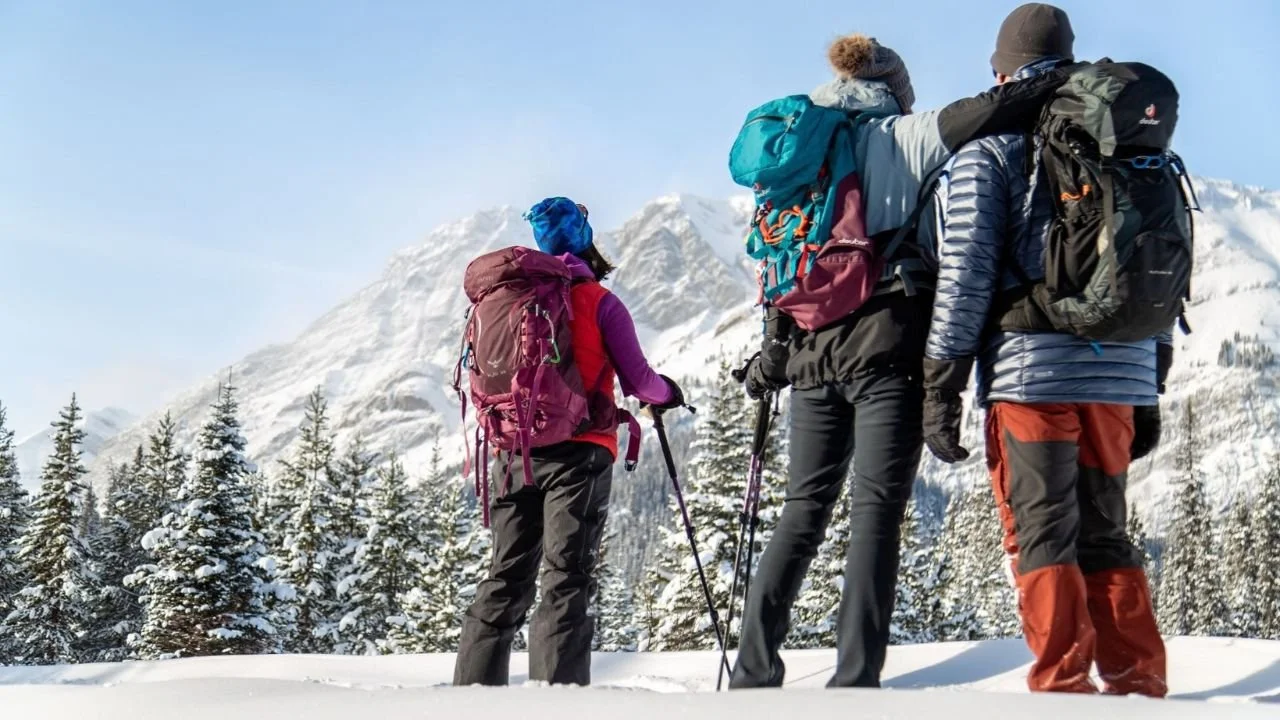
You may feel cold when you first step out of the car. After ten minutes of walking, you can be warm and sweating. Wet clothes then make you cold when you stop.
Dress in layers so you can adjust as you walk. Bring:
Insulated winter or hiking boots.
Warm socks.
Gloves or mittens.
A toque or warm hat.
A warm outer layer.
An extra layer for breaks.
If you book the Private Canadian Rockies Snowshoe Introduction Tour, from us at Canadian Rockies Experience, snowshoes, poles and backpacks are provided. You need to bring suitable winter clothing and insulated boots.
Mistake 3: Assuming Snowshoes Are Always Best
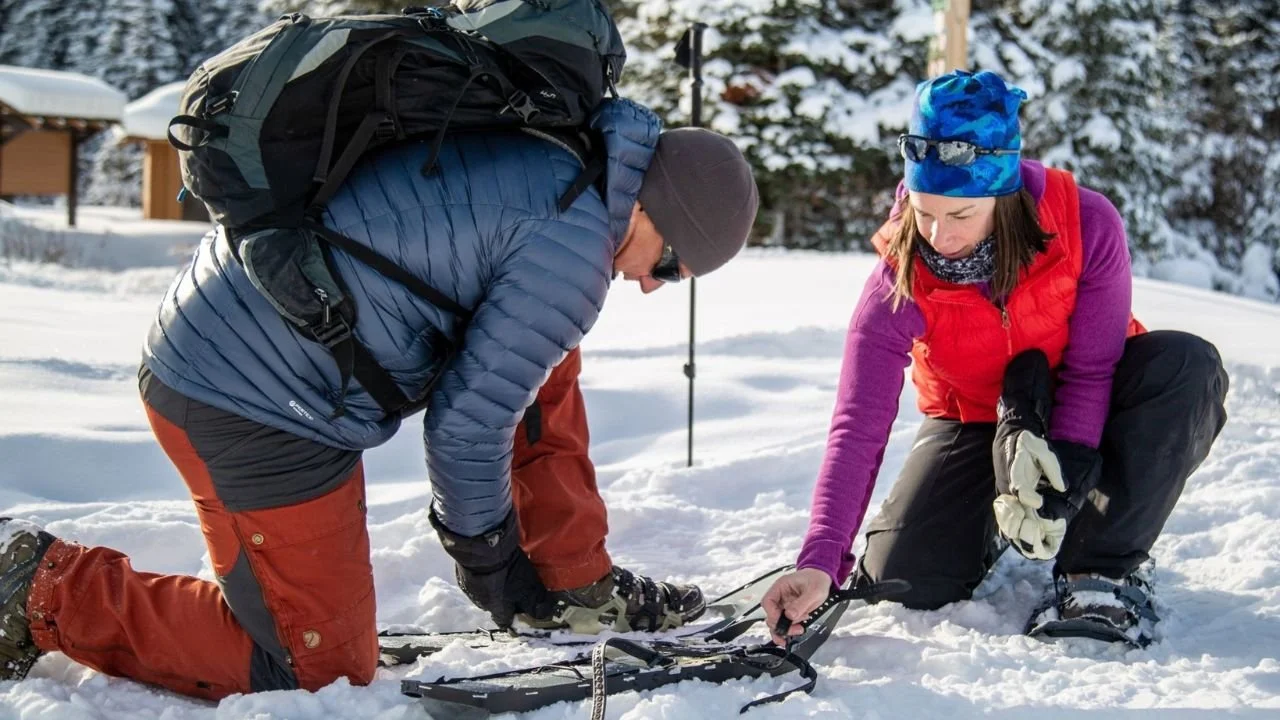
Snowshoes are great in fresh or deep snow. But they are not always the best choice. Packed or icy trails may be easier with winter boots or traction cleats.
Use the trail surface to decide:
Fresh or deep snow: Use snowshoes.
Packed snow: Winter boots may be enough.
Icy trails: Traction cleats usually give better grip.
Mixed conditions: Carry gear that lets you adjust.
Conditions can also change during the same walk. Do not keep snowshoes on just because you planned a snowshoeing day. Use the gear that feels safest for the surface under your feet.
Mistake 4: Judging the Day by Distance Alone
Five kilometres may sound easy. In fresh snow, every step takes more effort. Hills, cold weather and altitude can also slow you down.
When judging a route, think about:
Total walking time.
Snow depth.
Elevation gain.
Weather conditions.
The fitness level of the slowest person in your group.
How often you may want to stop.
The private snowshoe introduction from Canadian Rockies Experience is a seven-hour experience with about two hours and 5 km of snowshoeing. It also includes Banff or Canmore pickup, luxury SUV transport, hot drinks, snacks and a mountain-lodge lunch.
One detail is worth knowing before you book. The snowshoe portion takes place in Canmore/Kananaskis, even though pickup is available from Banff.
Mistake 5: Paying for a Guide Without Knowing What You Are Buying
You do not need a guide for every easy winter walk. If you are comfortable with winter driving, route planning, trail conditions and the right gear, you may be happy exploring a suitable marked route on your own.
A private guide becomes more useful when you want to remove some of that planning. It can be a good fit if:
You are new to winter mountain travel.
Your group has different fitness levels.
You do not want to manage winter driving.
You prefer not to rent or organise gear yourself.
You want a flexible pace.
You value comfort and privacy.
You want local help choosing a suitable route.
At Canadian Rockies Experience, we offer private trips with local guides and private transport. Our private winter tours include snowshoeing, winter sightseeing, ice walks and other winter experiences.
The real value of a private tour is not having someone simply walk in front of you. It is having fewer decisions to manage, so you can spend more of the day enjoying the mountains.
Before You Step Onto the Snow
Snowshoeing in Banff does not need to feel technical. Choose a winter route, check conditions that morning, respect avalanche warnings, and use the traction that suits the surface. Those habits remove much of the avoidable beginner stress.
Then give the day some room. Stop when the light catches Cascade Mountain. Warm your hands around a drink and listen to how quiet fresh snow makes the forest. The better question is not “How far can we get today?” It is “How much of this place do we actually want to notice?”
FAQs About Snowshoeing in Banff
Is snowshoeing in Banff suitable for complete beginners?
Yes. Beginners can enjoy snowshoeing in Banff when they choose an easy winter route and check current conditions first. Parks Canada rates routes such as Johnson Lake and Tunnel Mountain Drive as easy, but snow, ice and poor visibility can make any winter trail harder.
Do I need snowshoes in Banff if the trail is packed?
Not always. Snowshoes work best in fresh or deeper snow. On firm, packed trails, winter boots may be enough, while icy sections often call for traction cleats. Always choose your footwear based on current trail conditions.
What is an easy snowshoe trail in Banff for first-time visitors?
Johnson Lake is one beginner-friendly option. Parks Canada rates the 2.8 km loop as easy, with minimal elevation gain. Tunnel Mountain Drive is another easy option at 2 km one way. Conditions can change quickly, so check the latest trail report before leaving.
Can I go snowshoeing in Banff without a guide?
Yes, you can explore suitable marked winter routes without a guide if you are comfortable checking trail conditions, weather and avalanche information. A private guide may be more useful if you are new to winter mountain travel, do not want to drive in winter, or prefer help with equipment and route planning.
What is the best time for beginner snowshoeing in Banff?
Parks Canada says prime snowshoe conditions are generally from late December to early April, especially after fresh snowfall. Conditions vary from year to year, so check current snow and trail reports rather than choosing a route based only on the calendar.
